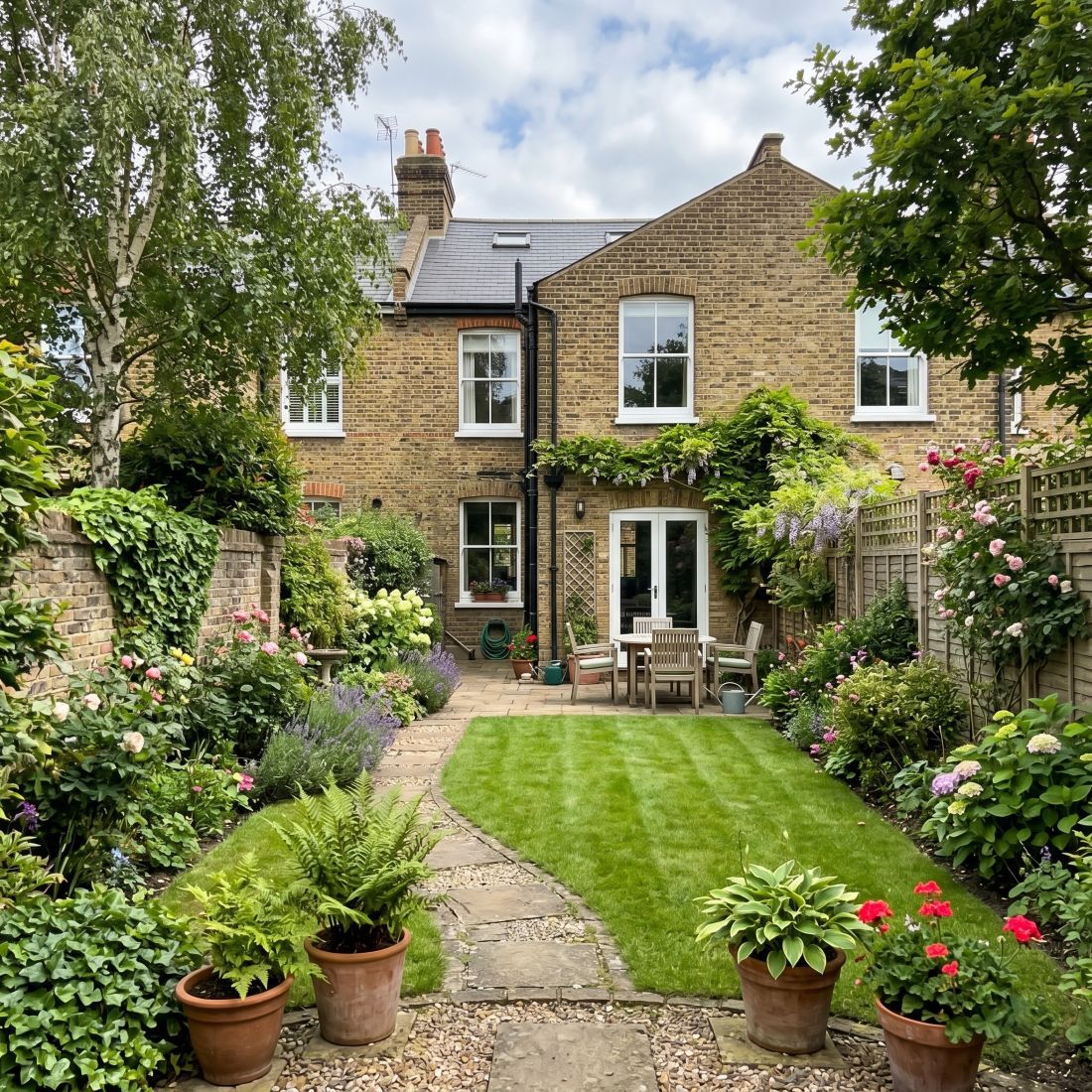
Cleaning a Rented House With a Garden: What Counts as the Tenant’s Responsibility
Of all the things that quietly eat into a deposit, the garden is the one nobody sees coming. People will scrub an oven until their arms ache and steam a carpet within an inch of its life, then stride out to the check-out inspection having completely forgotten about the knee-high jungle taking over the back lawn. And in a place like Mill Hill, where the houses tend to come with proper gardens rather than the postage-stamp courtyards of inner London, that oversight can be expensive. The leafy NW7 streets are lined with family homes whose outdoor space is half the appeal, which means the garden is half the responsibility too. The maddening part is that almost nobody is entirely sure where their duty ends and the landlord’s begins. So let us dig into it, before the brambles do.
The Tenancy Agreement Is the First Place to Look
Before anyone reaches for the shears, the answer to “whose job is this?” lives in a document most tenants signed months ago and never glanced at again.
What “keep the garden in good order” actually means
Your tenancy agreement almost certainly contains a clause about the garden, and it usually reads something like “the tenant shall keep the garden in good and tidy order”. Vague? Wonderfully so. But the underlying principle is the same one that governs the rest of the property: you are expected to return the garden in roughly the condition it was in when you arrived, with allowance made for the ordinary passage of time.
That phrase does not mean you have to transform the place into something off the telly. Nobody is expecting you to channel your inner Monty Don and produce a show garden by handover day. It means basic, consistent upkeep – keeping things tidy, alive and under control. The garden you took on is the garden you give back. If you inherited a neat lawn and tidy borders, that is your benchmark; if you inherited a wilderness, you are not on the hook for landscaping it into Kew. The check-in inventory, ideally with photographs, settles any argument about what the starting point actually was.
The Jobs That Land Squarely on the Tenant
With the principle established, here is the practical reality – the routine graft that is unambiguously yours, agreement or no agreement.
Mowing, weeding and general upkeep
Mowing the lawn is the headline act. A garden left to grow into a meadow over a tenancy is the single most common cause of a garden-related deduction, and “I didn’t have a mower” is not the defence people imagine it to be. Alongside that sits weeding the borders, so the flower beds do not vanish under a carpet of dandelions, and keeping the patios and paths swept and free of debris.
The rest is common sense made official: clearing fallen leaves before they turn the patio into an ice rink, watering during a dry spell so the plants you were given do not expire on your watch, and – crucially – not treating the garden as an overflow skip. The number of gardens that get handed back hosting a rusted barbecue, three broken plant pots and a deflated paddling pool would astonish you. Keeping the space free of rubbish is squarely your job, and it is the easiest of the lot to get right, since it mostly involves not creating the problem in the first place.
Where Responsibility Shifts to the Landlord
Now for the good news, because plenty of garden jobs are emphatically not your problem, and tenants too often shoulder them out of vague guilt.
Trees, structures and the big stuff
Anything that strays into the territory of repair or major works belongs to the landlord. Tree surgery is the classic example – pruning a mature tree, dealing with a dangerous overhanging branch, or felling something that has outgrown its spot is skilled, often expensive work, and it is not reasonable to expect a tenant to arrange it. The structures are landlord territory too: the fences, the boundary walls, the shed, the decking framework. If a fence panel blows down in a storm, that is a repair, not a tidy-up.
The same logic covers plants that die of natural causes despite reasonable care, water features and ponds, and the genuine legal monster of the garden world: Japanese knotweed. That invasive nightmare is the owner’s responsibility, not the tenant’s, and it is one you should report rather than attempt to tackle with a trowel and optimism. As a rule of thumb, if a job needs a professional, a permit or a structural repair, it has almost certainly stopped being yours.
The Tools Question Nobody Reads Until They Need To
Here is a grey area that causes more friction than it should, usually because nobody thought to clarify it at the start.
Who provides the mower (and who buys the petrol)
If the landlord provided garden tools at check-in – a mower in the shed, a set of shears, a strimmer – then the expectation is clear: you use them to keep the garden up, and you return them in working order. Straightforward enough. The murkier question is the substantial garden with no equipment provided at all.
The reasonable position, and one many agreements quietly assume, is that a tenant cannot be expected to buy a ride-on mower and a full arsenal of kit to maintain a large garden they happen to be renting. For a generous Mill Hill plot backing onto the Green Belt, the landlord may well be expected to supply the tools, or even arrange a gardener, with the cost folded into the rent. The lesson is to read this into the agreement before you move in, or at the very least raise it early, rather than discovering at the eleventh hour that you are contractually responsible for taming half an acre with a pair of nail scissors.
Fair Wear and Tear Has a Green-Fingered Version
The same forgiving principle that protects tenants indoors extends out into the garden, and it is well worth understanding before you panic about a few bare patches.
Seasons, dormancy and what you can’t be blamed for
Gardens are not static; they have moods, and most of those moods are dictated by the calendar. A lawn inspected in the depths of winter will look nothing like it did in July, and bare borders in February are not evidence of neglect – they are evidence of February. A check-out clerk worth their clipboard knows the difference between a garden that has gone dormant and a garden that has gone feral.
This is fair wear and tear in its leafy form. You are not expected to defy the seasons, perform miracles on a shady lawn that struggles every year, or hand back a garden in better nick than you received it. What you are expected to avoid is genuine neglect: the weeds gone to seed, the lawn lost to the wild, the borders no one has touched since you moved in. The benchmark, once again, is the inventory. Match the condition recorded at the start, season for season, and you are on solid ground – or solid soil, as the case may be.
What the Garden Needs at the End of the Tenancy
All of which brings us to handover day, when the garden has to actually pass muster. This is where a season of steady upkeep pays off, and where a season of neglect comes home to roost.
From mowed lawn to jet-washed patio
The end of tenancy garden checklist is, happily, just the routine jobs done one final time and done thoroughly. The lawn wants a fresh mow and a tidy edge. The borders want weeding so the planting is visible rather than smothered. The patio or decking, which across the larger NW7 gardens tends to be a serious expanse, usually needs the moss and algae blasted off – a jet wash here transforms a green, slippery slab back into the handsome surface it was at check-in, and it is one of the most satisfying jobs in the trade.
After that it is a matter of clearing every last leaf, emptying the shed of anything you brought into it, and removing all rubbish and abandoned belongings, including that doomed barbecue we discussed earlier. The goal is simple and it is the same goal that runs through the whole property: return the garden to the condition logged on the inventory, fair wear and tear aside. Get the everyday upkeep right across the tenancy and this final pass is a pleasant afternoon’s work. Let it slide, and you are facing a full weekend with a strimmer and a deep sense of regret – which is a far less charming way to say goodbye to a garden than it deserves.